

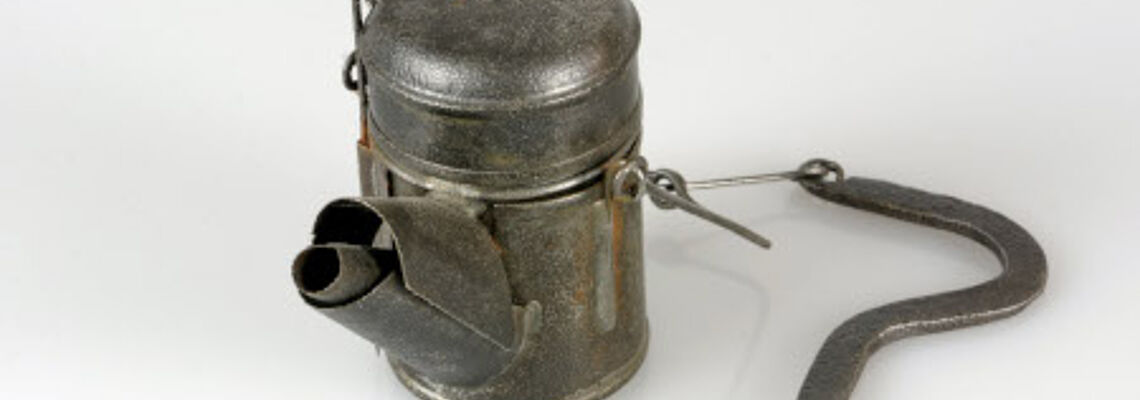
The 'Magdeburger Börde' as a natural area and its historical development are the guideline for the museum and thus also for the orientation of its collection profile. Objects from or with direct reference to the region can be a meaningful extension for the collection.
Among the museums of the Börde district, the Börde Museum Burg Ummendorf has as a special work and exhibition focus the task of presenting life in the local rural area, the history of agriculture and thus also of industrialization in the region. Related to this is the cultural history and today's use of useful plants. The central example here is the sugar beet.
As museum staff, we regularly scrutinize our holdings for gaps or important additions.
Material on the regional history of the Middle Ages
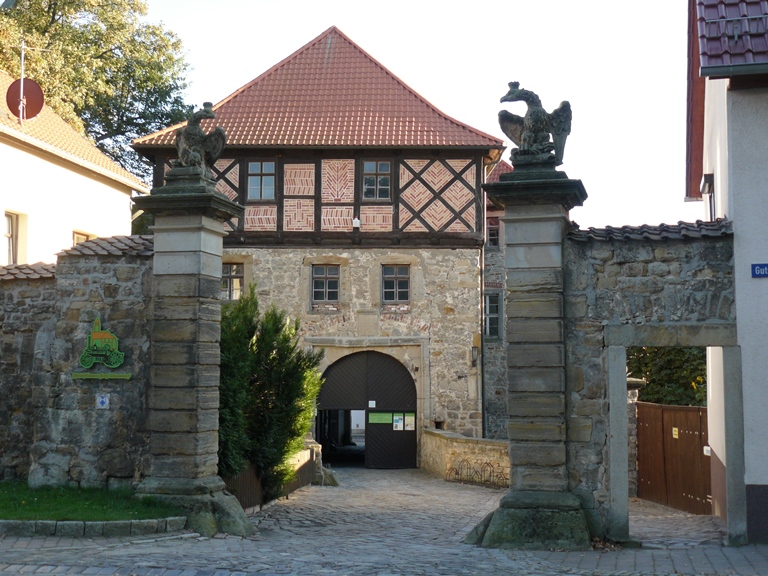
The collection contains relatively few objects from the Middle Ages (6th century to 15th century) and the early modern period (16th to 18th century). These are mainly ceramic objects or coins. Some of the objects are connected with Ummendorf Castle. Either because they were discovered here during excavations or because they belonged to the former lords of the castle (e.g. coat of arms of Andreas II von Meyendorff).
Regional art
People drew and painted even in ancient times. Some of the oldest works in the collection are 10 monthly pictures, in which the work of agriculture was depicted. Modern works from the 20th century are by professional and also amateur artists, who have produced their style without professional training and act(ed) rather in secret. Both can reflect the spirit of the times in a very meaningful way and represent desirable additions.
Everyday life photographs
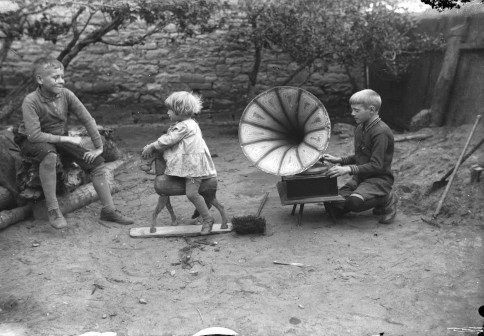
With the photographs of Fritz Giesecke, the museum owns a treasure of around 1,000 photographs, which are consulted again and again and which depict life in the first half of the 20th century. In modern times, the emphasis is on digital photography. Analog images are disappearing more and more. This is precisely why we are actively collecting here, as we are aware that these are being handed down less and less.
Agriculture/Industrialization:
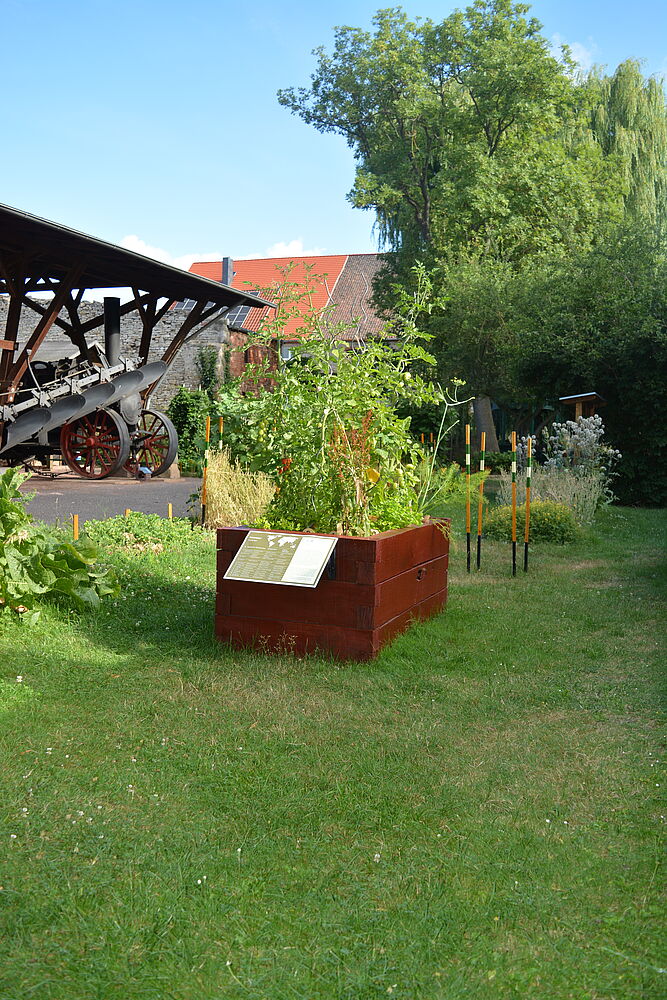
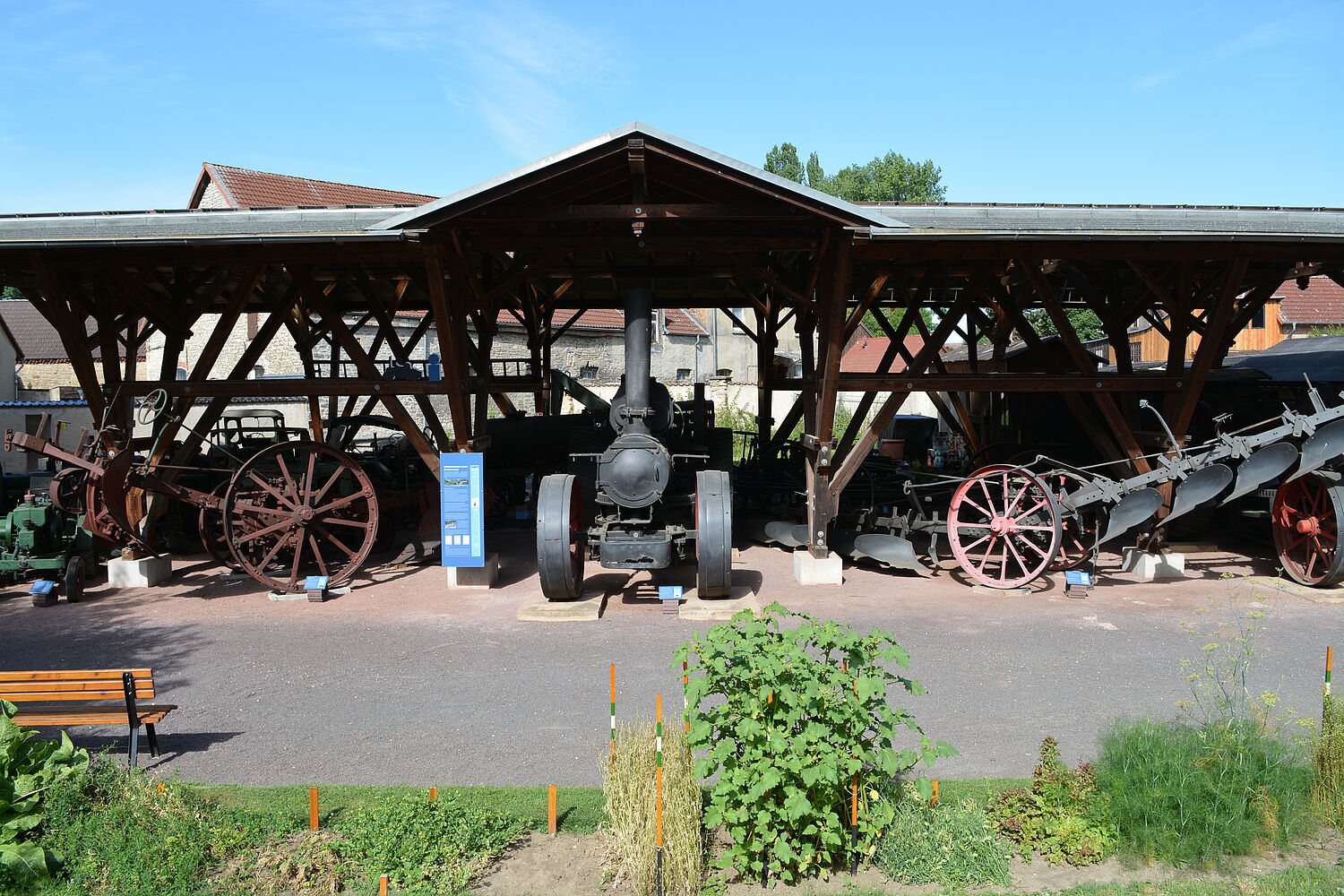
Agriculture and industrialization are directly related in the Börde. Mechanical engineering was developed for agriculture, and the rich agricultural yields led to the development of machines for further processing. The steam technology is to be mentioned at this point as a symbol. Objects with this reference continuously represent a meaningful addition to our holdings. The museum already possesses a collection that is unique in Europe, consisting not only of large-scale equipment (locomotives), but also of spare parts such as rivets and flanges/seals.
Witnesses of the land reform
After World War II, much changed in the eastern states under Soviet occupation and the GDR that emerged from it. The generic term land reform is usually associated with the redistribution of land. People were expropriated and evicted from their property. Many fled as a result. Today, more than 50 years after the land reform, there are still few authentic contemporary witnesses. We would like to talk to them in order to preserve the history of the people.
Estate of Saxon (migrant) workers
In the 19th century there was an enormous boom in agriculture, especially in connection with sugar beets. A shortage of labor was the result, which could only be covered by migrant workers. These came first from the Eichsfeld and later from the areas bordering Prussia to the east (Silesia and Poland). We are interested in objects and stories about the Saxon migrants.
Opening hours museum visit

Opening hours (February - November):
| Monday closed |
| Tuesday ─ Friday |
| 9:00 ─ 17:00 |
| Saturday, Sunday, public holiday |
| 11:00 ─ 17:00 |
| Admission closing time 16:30. |
Admission prices

| Adults: |
| 5,00 EUR |
| Concessions: |
| 2,50 EUR |
| (Pupils, students and trainees receive reduced admission upon presentation of a valid ID) |
| Family ticket: 10,00 EUR |
| (2 adults + 2 children) |
| Children up to 6 years of age are admitted free of charge. |
| School classes from the Börde district including teacher and accompanying person have free admission if the visit is for educational purposes. |